
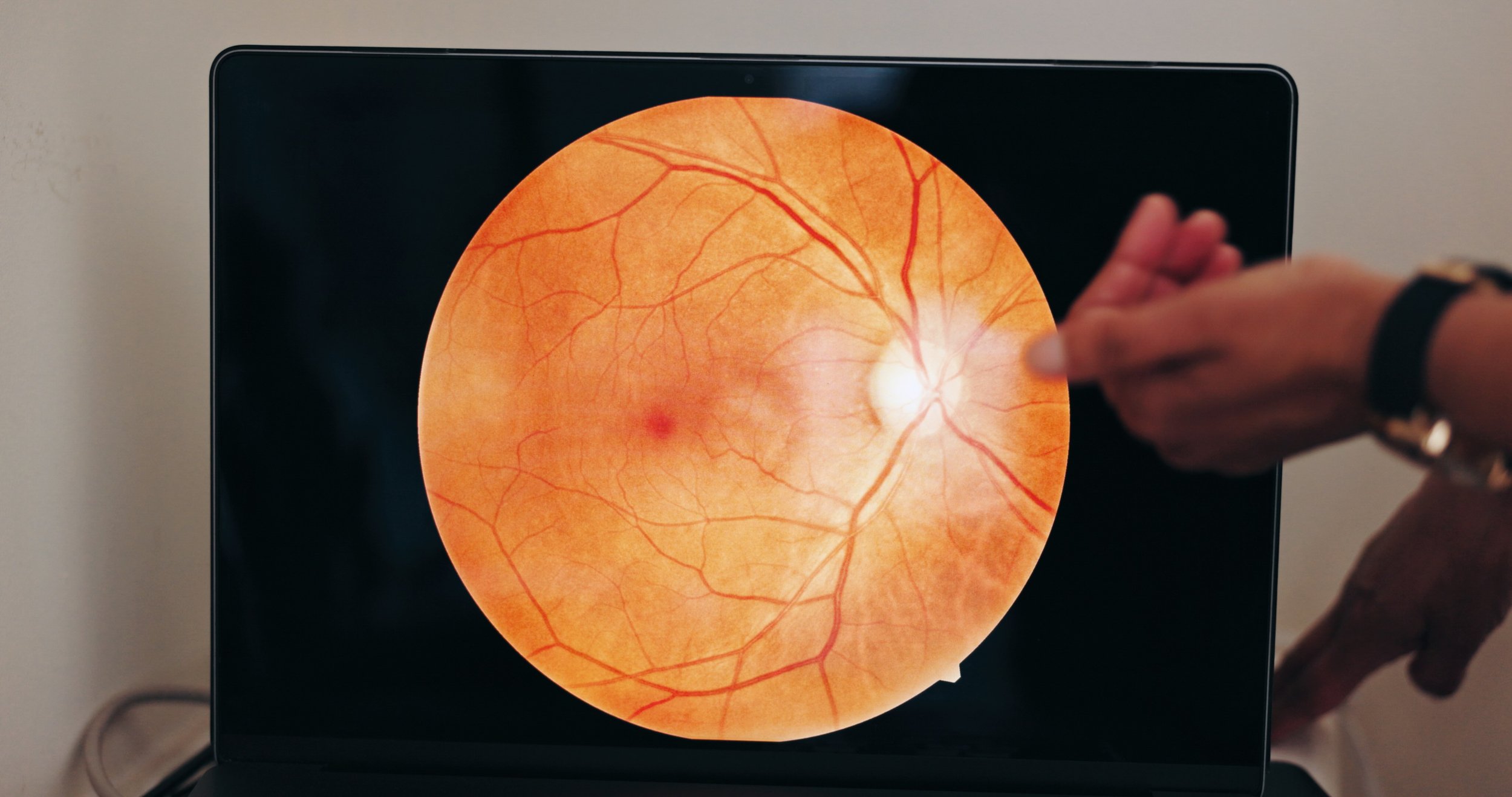
Retinal Vein Occlusion
A Retinal Vein Occlusion (RVO) occurs when one of the veins responsible for draining blood from the retina becomes blocked. The retina is the light-sensitive tissue at the back of the eye that sends visual information to the brain. When blood flow is disrupted, fluid and blood can leak into the retina, causing swelling and affecting vision.
Retinal Vein Occlusions are one of the most common retinal vascular conditions and most often affect adults over the age of 50. Risk factors such as high blood pressure, diabetes, high cholesterol, glaucoma, and cardiovascular disease can increase the likelihood of developing an RVO. Early diagnosis and treatment are important to help preserve vision and reduce the risk of complications.
Symptoms of a Retinal Vein Occlusion
Symptoms can vary depending on the severity and location of the blockage. Some people notice sudden changes in vision, while others experience more gradual symptoms.
Common symptoms include:
Blurred or distorted vision
Sudden vision loss in one eye
Dark spots or floaters in the field of vision
Difficulty reading or seeing fine details
Areas of missing or reduced vision
Vision that worsens over a period of hours or days
Because these symptoms can also occur with other serious eye conditions, any sudden change in vision should be evaluated promptly.
Branch Retinal Vein Occlusion (BRVO)
A branch retinal vein occlusion occurs when a smaller branch vein within the retina becomes blocked. This is the more common form of retinal vein occlusion. The blockage affects only a portion of the retina, so symptoms and vision loss may be limited to a specific area of the visual field.
BRVO often develops where a retinal artery and vein cross each other. Over time, changes associated with conditions such as high blood pressure or atherosclerosis can contribute to compression of the vein and lead to a blockage.
Central Retinal Vein Occlusion (CRVO)
A central retinal vein occlusion occurs when the main retinal vein becomes blocked. Because this vein drains blood from the entire retina, CRVO typically causes more widespread retinal damage and can result in more significant vision loss than BRVO.
CRVO may be classified as either non-ischemic or ischemic. Ischemic CRVO is the more severe form and occurs when blood flow to the retina is significantly reduced, increasing the risk of serious complications.
What are the treatments for Retinal Vein Occlusion?
Treatment for retinal vein occlusions focuses on managing complications, reducing retinal swelling, and preserving vision. The most appropriate treatment depends on the type of occlusion and the extent of retinal damage.
Anti-VEGF Injections
Anti-VEGF medications are among the most common treatments for retinal vein occlusions. These medications are injected into the eye to reduce abnormal blood vessel growth and decrease retinal swelling caused by fluid leakage. Many patients experience improved or stabilized vision with ongoing treatment.
Panretinal Photocoagulation
Laser therapy may be recommended for certain patients, particularly when abnormal blood vessels develop as a complication of the vein occlusion. Laser treatment can help reduce the risk of bleeding and other vision-threatening problems.
Vitrecomy Surgery
In certain cases, vitrectomy surgery may be recommended to treat complications associated with a retinal vein occlusion. This procedure is typically considered when complications such as a non-clearing vitreous hemorrhage (bleeding into the vitreous cavity), traction on the retina, or other vision-threatening conditions develop. During surgery, the vitreous gel is replaced with a clear solution to help restore the eye's normal structure.
Management of Underlying Health Conditions
Because retinal vein occlusions are often associated with systemic health conditions, controlling risk factors is an important part of treatment. Managing blood pressure, blood sugar, cholesterol levels, and other cardiovascular risk factors can help support overall eye health and reduce the risk of future vascular events.