
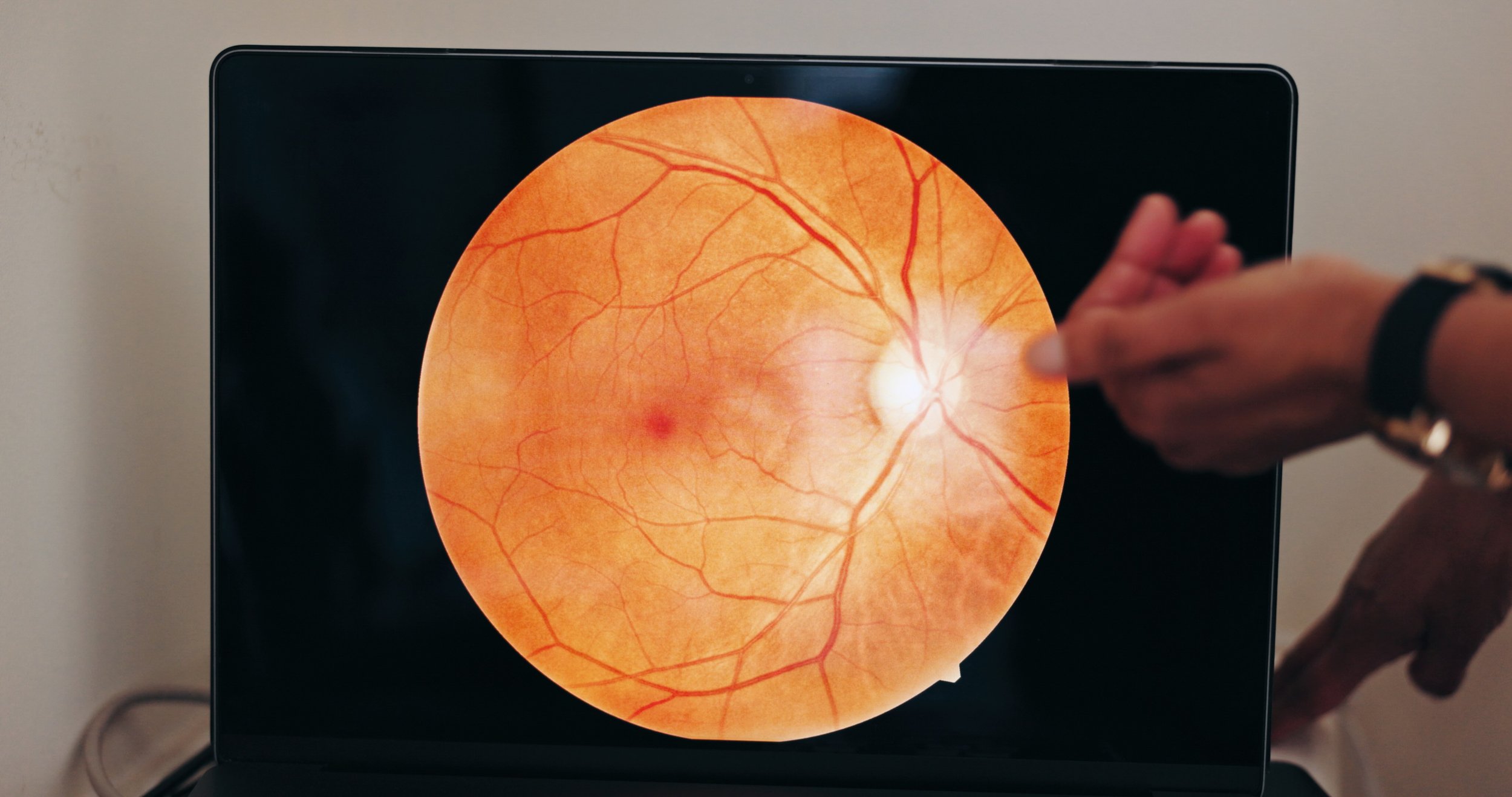
Macular Degeneration
Age-Related Macular Degeneration (AMD) is a common eye condition that usually develops as people get older, especially after age 50. There are two main types: wet and dry. AMD can affect your central vision, but it rarely causes complete vision loss. While there is no cure yet, treatments can help manage symptoms and protect the vision you still have.
Risk Factors
As the name suggests, Age-Related Macular Degeneration is more common as you get older. Still, some people can develop it earlier in life due to other factors.
In addition to age, several other factors can increase your risk for macular degeneration, including:
Having a family history of macular degeneration
Being overweight
Smoking
Having high blood pressure (hypertension)
Having heart disease
Having high cholesterol levels
Eating a diet high in saturated fats
Being white
Dry Age-Related Macular Degeneration
Dry AMD is the most common type, affecting about 90% of people with AMD. It happens when small yellow protein deposits, called drusen, build up under the macula. These deposits can make the macula thinner and drier. People with dry AMD may have drusen, changes in pigment, or areas where cells in the retina are lost, known as geographic atrophy. Geographic atrophy can lead to loss of central vision.
Treatments for Dry AMD
The Age-Related Eye Disease Studies (AREDS and AREDS2) found that certain vitamins and minerals may help slow down the progression of Dry AMD. These supplements include the following:
Vitamin C
Vitamin E
Lutein
Zinc
Copper
Zeaxanthin
Until recently, nutritional supplements were the only treatment for Dry AMD. Now, there is an FDA-approved light therapy called Valeda that can help improve vision for people with Dry AMD. This advanced, non-invasive treatment supports retinal health by using targeted, low-level light energy to stimulate cells in the retina. It does not require injections, surgery, or cause tissue damage. Click here to learn more about Valeda.
Wet Age-Related Macular Degeneration
Wet AMD occurs when abnormal blood vessels grow under your retina and macula. These vessels leak blood and fluid, causing a bulge in your macula. As a result, you might notice dark spots in the center of your vision. This type is more serious and can quickly lead to total loss of central vision.
Treatments for Wet AMD
There are medications that can treat, but not cure, Wet AMD. These include anti-vascular endothelial growth factor (anti-VEGF) injections. They work by blocking VEGF, a protein that encourages new blood vessels to grow. Before the injection, your eye is numbed, and the shot is given into the vitreous part of your eye. Anti-VEGF injections can sometimes improve vision.
These drugs include:
Aflibercept (Eylea®)
Ranibizumab (Lucentis®)
Bevacizumab (Avastin®)
Faricimab-svoa (VABYSMO®)
Brolucizumab (Beovu®)
Photodynamic Therapy
Another treatment for Wet AMD is Photodynamic Therapy (PDT). During PDT, a laser is aimed through the eye onto the retina. The laser interacts with a special dye injected into the bloodstream, which helps seal the abnormal blood vessels and prevents further damage to the eye. The main advantage of PDT is that the laser does not use heat. This reduces damage to surrounding tissue and allows the procedure to be repeated if needed.
Panretinal Photocoagulation
Laser Photocoagulation was the first treatment developed for Wet AMD. It is less common since the development of anti-VEGF injections, but may still be used. During this treatment, a laser seals and destroys leaking blood vessels.