
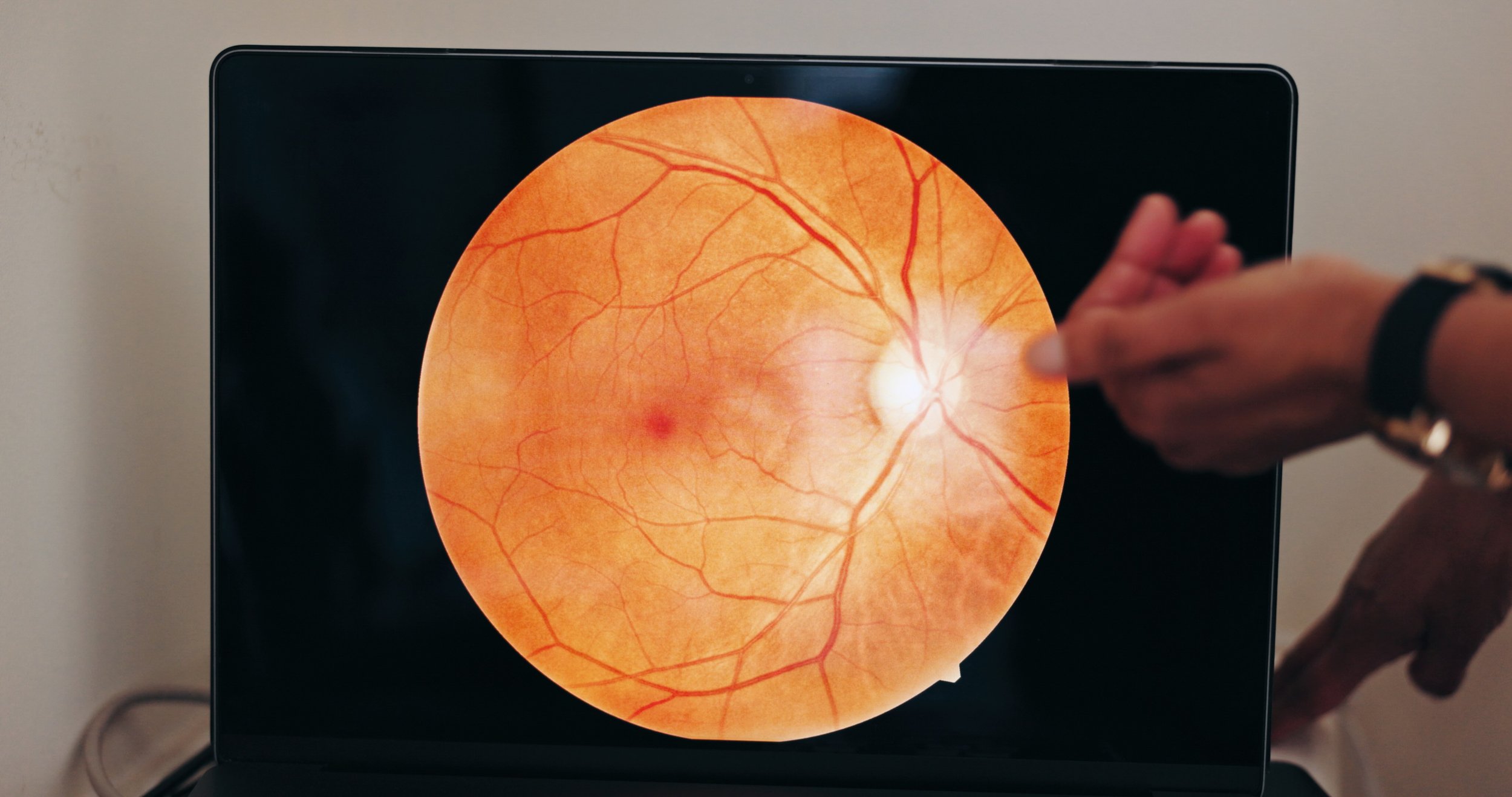
Diabetic Retinopathy
Diabetic retinopathy is a diabetes-related eye problem. It happens when the blood vessels in the retina, the part of the eye that senses light, become damaged. Anyone with type 1 or type 2 diabetes can develop diabetic retinopathy. The risk goes up the longer a person has diabetes, especially if blood sugar is not well controlled. There are two types of diabetic retinopathy: Nonproliferative and Proliferative.
In the early stages, diabetic retinopathy may not cause any symptoms or may only cause mild vision problems. However, it can eventually lead to blindness if diabetes or other health issues are not managed properly.
Over time, high blood sugar can damage the small blood vessels that feed the retina, reducing its blood supply. In later stages, the eye tries to grow new blood vessels, but these often do not form properly and can leak or bleed easily.
Nonproliferative Diabetic Retinopathy
This is the more common form of the condition, also known as NPDR, where new blood vessels do not grow.
With NPDR, the walls of the blood vessels in the retina become weaker. Small bulges can form on the walls of the smaller vessels, sometimes leaking fluid and blood into the retina. Larger vessels may swell and change in width. As more blood vessels are damaged, the condition can go from mild to severe.
Sometimes, damage to the retinal blood vessels causes fluid to build up, which is called edema. This usually happens in the center of the retina, known as the macula. If macular edema affects your vision, treatment may be needed to reduce swelling and prevent permanent vision loss. Macular edema can occur in both nonproliferative and proliferative diabetic retinopathy.
Proliferative Diabetic Retinopathy
Diabetic retinopathy can become more severe in this type, also known as PDR. Damaged blood vessels close off, leading to the growth of new, irregular blood vessels in the retina. These new vessels can leak into the clear, jellylike substance in the center of your eye, called the vitreous.
Over time, scar tissue from new blood vessel growth can cause the retina to pull away from the back of your eye. If these new vessels block fluid from leaving the eye, pressure can build up. This pressure can damage the optic nerve, which sends information from your eye to your brain, and may lead to glaucoma.
Treatments for Diabetic Retinopathy
Some people with diabetic retinopathy may benefit from laser surgery, which helps control and shrink leaking blood vessels in the retina. This treatment also helps stop new blood vessels from growing. Laser surgery does not cure diabetic retinopathy, but it can slow or stop the disease from getting worse. Sometimes, the clear fluid inside the eye, called the vitreous, can become cloudy with blood. If this happens, we may need to drain the cloudy fluid and replace it with a clear saline solution during a surgery called Vitrectomy. If the disease does not slow or stop after laser treatments, special injections may be used to help slow down diabetic retinopathy. These injections help stop the growth of new blood vessels and decrease fluid buildup.