
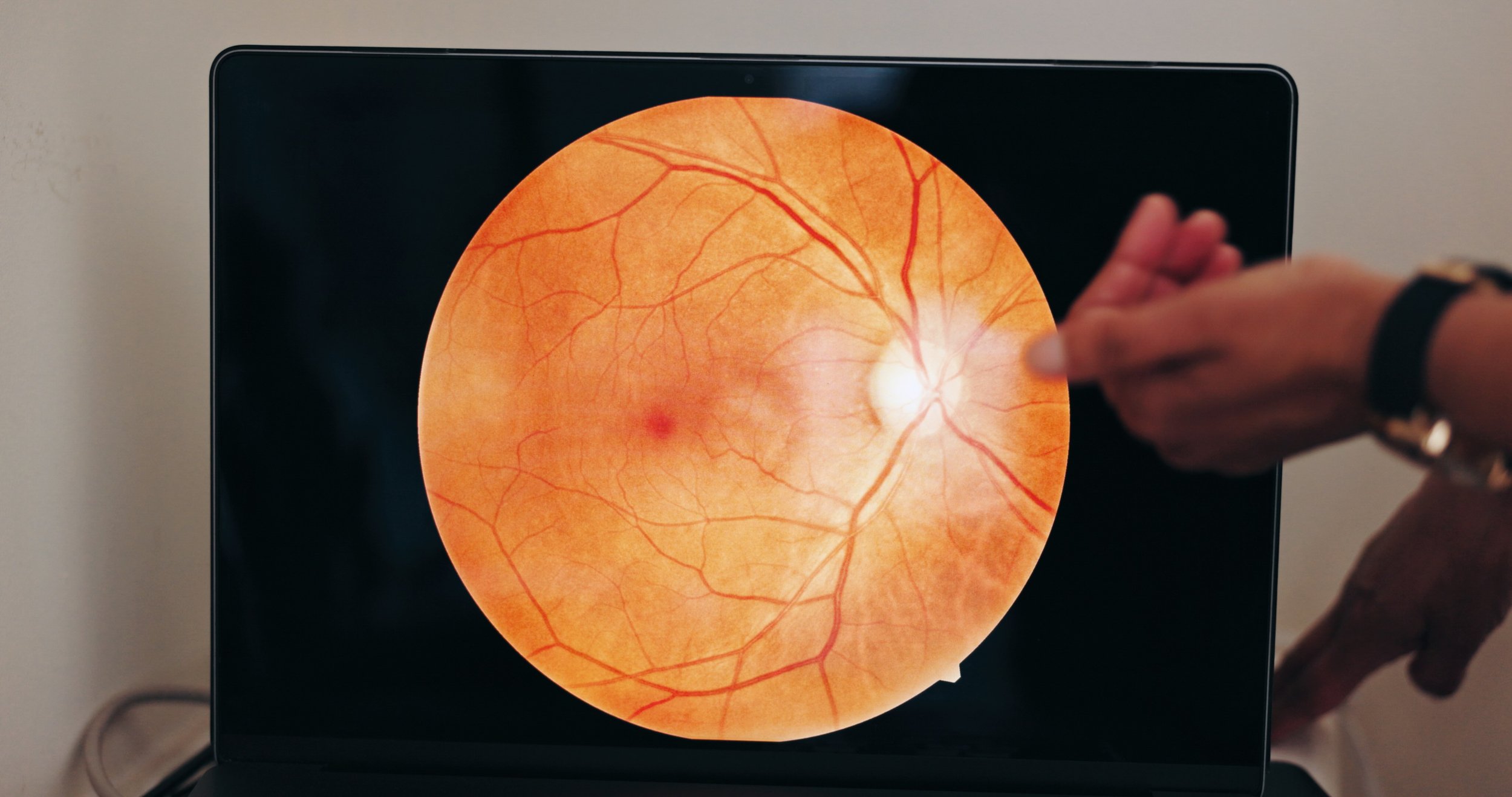
Macular Hole & Pucker
Macular holes and puckers are two common ways the macula can be damaged. Both usually happen as we age and can affect your vision. Even though they sound similar, they are actually quite different.
Macular Pucker
A macular pucker develops when scar tissue forms on the macula. As this tissue grows, it tightens and causes the retina to wrinkle. For the macula to function properly, it needs to remain flat against the back of the eye. If the macula becomes wrinkled or bulges, central vision can become distorted. As the scar tissue continues to develop, symptoms may gradually worsen.
If you have a macular pucker, your vision might look wavy, and it can be hard to see small details. You may notice gray, cloudy, or blank spots in the center of your vision. Straight lines might also look bent or distorted.
Macular Hole
Macular holes are not very common, but they can make it much harder to do things that need sharp vision, like driving, reading, or detailed work. The main cause of a macular hole is aging. As we get older, the gel-like substance inside the eye, called the vitreous, starts to shrink and pull away from the retina. Usually, this happens without problems, but sometimes the vitreous stays attached and stretches the macula, which can cause a hole to form.