
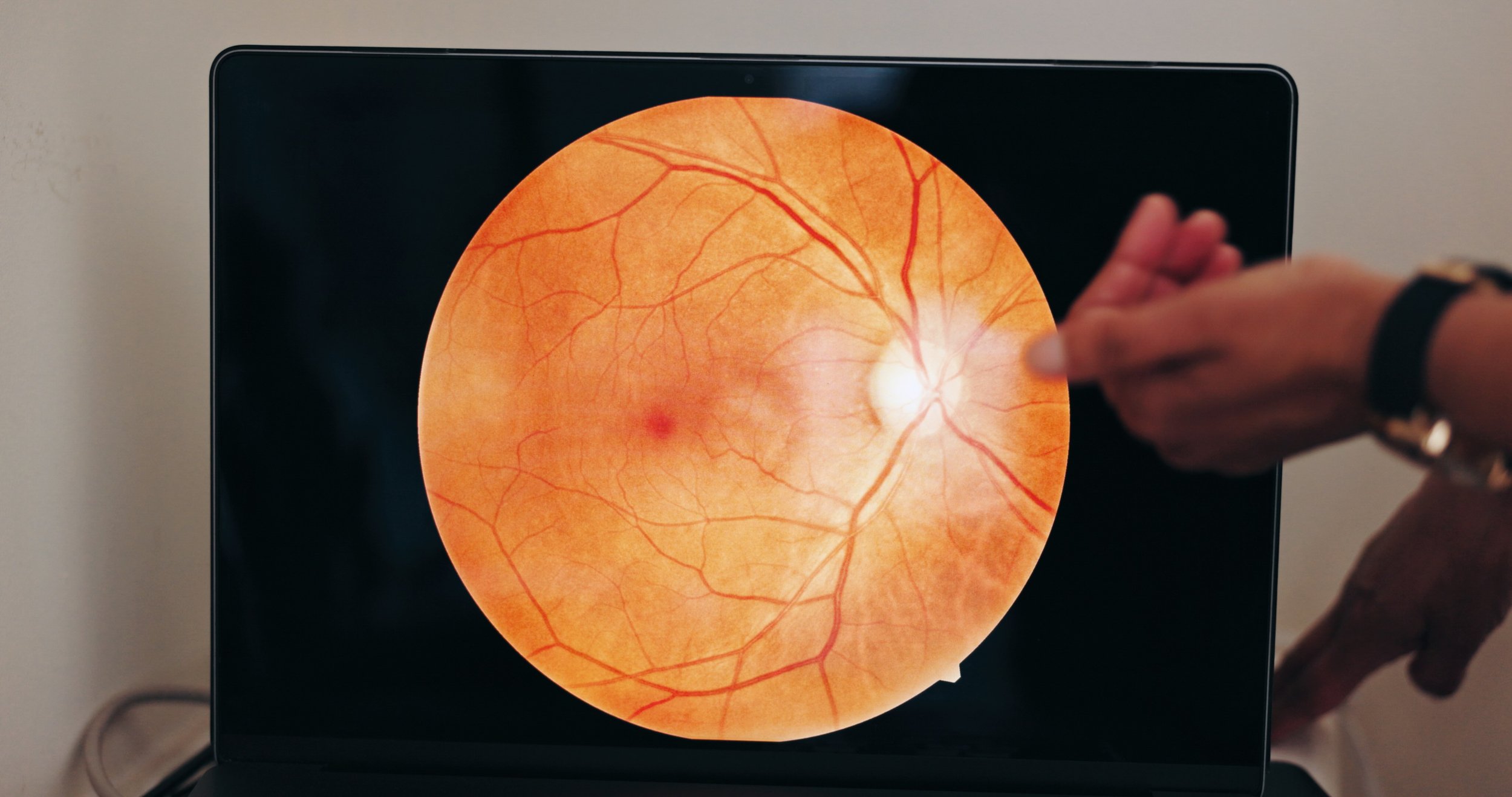
Macular Edema
Macular Edema is when fluid accumulates in the macula, leading to swelling. This swelling can distort vision, causing blurriness and making colors appear faded. Without timely treatment, Macular Edema may result in permanent vision loss.
What are the symptoms of Macular Edema?
Macular Edema typically develops painlessly and may not cause noticeable symptoms at first. When symptoms do appear, it often indicates that blood vessels in the retina are leaking. The primary symptoms are blurry vision and progressive vision decline.
Patients with macular edema may experience:
Objects look wavy, especially when you look straight ahead
Objects look like they’re different sizes if you look out of 1 eye and then the other
Colors look dull or faded
When Macular Edema affects only one eye, patients may take longer to notice vision changes. In some cases, Macular Edema leads to only mild blurriness, while in others it results in more severe central vision loss, making everyday tasks, such as reading or driving, increasingly difficult.
What causes Macular Edema?
A variety of conditions can lead to Macular Edema. The most common cause is Diabetic Retinopathy, an eye disease associated with diabetes that results in vision loss. When Diabetic Retinopathy leads to swelling in the macula, it is known as Diabetic Macular Edema (DME).
Other causes of macular edema include:
Age-Related Macular Degeneration(AMD): In the wet form of AMD, abnormal blood vessels in the macula can leak fluid into or underneath the retina, resulting in macular swelling.
Retinitis Pigmentosa (RP): This inherited retinal disorder may also be associated with swelling of the macula.
Retinal Vein Occlusion: When retinal veins become blocked, blood drainage is impaired, leading to fluid leakage and swelling within the macula.
Eye Surgery: Some patients develop macular edema following procedures for other eye conditions, such as cataract surgery. Even if the swelling is mild, prompt treatment is vital to protect long-term vision.
Certain Medications: Some medications, including those used to treat glaucoma, may contribute to the development of macular edema as a side effect.
Treatments for Macular Edema
Identifying and addressing the underlying cause of Macular Edema is essential for managing symptoms. For instance, if DME is present, controlling blood sugar is crucial to prevent further vision loss. Our team may also recommend one or more of the following treatments:
Administering special injections, known as anti-VEGF drugs, helps to inhibit abnormal blood vessel growth and reduce fluid accumulation. These medications are injected into the eye in a controlled, clinical setting.
Certain types of laser treatment can be used to treat Macular Edema, such as Focal Laser Photocoagulation or Photodynamic Therapy, particularly when it is caused by diabetes or retinal vein occlusion. Laser therapy may also be recommended if injections are not sufficiently effective.
Surgical intervention is another option our retina specialists may consider. In a vitrectomy, small incisions are made in the eye wall to remove most of the vitreous gel. This minimally invasive, sutureless procedure can help manage Macular Edema. Additionally, our specialists may recommend implanting a device such as SUSVIMO, which continually dispenses anti-VEGF medication and reduces the need for in-office visits.